America Got Weird: Why the Country Is Finally Ready for the Comedy It Deserved All Along
For years, if you told someone you were into alternative comedy, you got a specific look. A polite, slightly concerned expression that communicated, without words: Oh, so you like the comedy that isn't funny? You'd try to explain that no, it's funny, just differently funny, funny in a way that requires a slightly different orientation, and by the time you finished the sentence you'd lost them to their phone.
That look is rarer now. Not gone — nothing good ever fully escapes the shadow of misunderstanding — but rarer. Something meaningful has shifted in the American appetite for humor, and the evidence is everywhere if you know where to look.
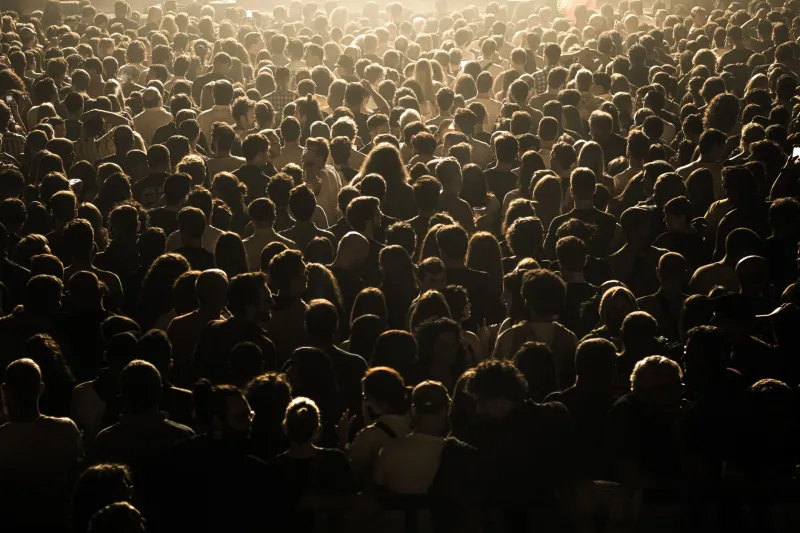
Absurdist comedians are selling out theaters. Anti-comedy specials are landing on major streaming platforms. Experimental sketch groups are accumulating millions of followers without compromising a single frame of their vision. The audiences that alternative comedy festivals have been serving for years — the ones who always got it, who showed up faithfully to see Eugene Mirman do something that defied easy categorization — those audiences didn't grow smaller. They grew, and then they grew some more, and then apparently they told everyone they knew.
So what happened?
Reality Got So Absurd That Absurdism Became Realism
Let's start with the obvious, because ignoring it would be its own kind of comedy. The past decade of American life has been, by any reasonable measure, genuinely surreal. The news cycle has operated at a frequency that feels like satire written by someone who has never actually studied satire. Political discourse, public health crises, economic whiplash, social media's reality-distortion field — all of it has conspired to make straightforward, observational comedy feel slightly inadequate to the moment.
When reality is already doing absurdism at a professional level, comedy has two options: try to out-absurd reality, or find new angles that reality hasn't colonized yet. Alternative comedy, which has always operated in the territory of the unexpected and the conceptually strange, turned out to be better equipped for this environment than anyone anticipated.
There's a reason Tim Robinson's I Think You Should Leave became a cultural touchstone rather than a cult curiosity. It wasn't that audiences suddenly developed new taste. It was that the show's specific brand of committed, escalating weirdness felt true to something people were already experiencing — the sensation of living inside a bit that nobody will admit is a bit.
Streaming Didn't Create the Audience, But It Found Them
For a long time, the alternative comedy world operated on scarcity of access. You could see these performers if you lived in New York or Los Angeles or a handful of other cities, if you followed the right venues, if you knew which festivals to attend. The knowledge was passed person to person, like a very funny secret.
Streaming platforms essentially industrialized that secret-sharing. Netflix, HBO Max, and their various competitors, desperate for content that could differentiate them in an increasingly crowded market, started taking swings on comedy that wouldn't have gotten greenlit in the network era. Some of those swings connected with audiences who had never previously self-identified as fans of weird comedy, because they'd never had access to it.
This is worth dwelling on. The alternative comedy audience didn't just grow because the existing fans multiplied. It grew because there were always people out there who would have loved this stuff and simply never encountered it. Geography and distribution had been doing the gatekeeping that taste never actually required.
Social Media Made Weird Contagious in the Best Way
Here's the dynamic that nobody in traditional entertainment fully anticipated: absurdist comedy is extraordinarily shareable. A clip of something genuinely strange and committed travels because it generates a specific response in viewers — the need to immediately show it to someone else and watch their face.
Conventional wisdom held that accessible comedy traveled online and niche comedy stayed niche. But it turns out that "accessible" and "mainstream" are not synonyms. A bit that's deeply weird but executed with total confidence and craft is accessible in the way that a great magic trick is accessible — you don't need specialized knowledge to be delighted by it. You just need to encounter it.
Comics who built their aesthetic on the alternative circuit found that TikTok and Instagram didn't ask them to compromise. The platforms rewarded specificity and commitment as much as they rewarded broad appeal. Sometimes more.
Mainstream Venues Are Playing Catch-Up, Not Leading
Let's be clear about something, because it matters for how we understand this moment: the mainstream didn't discover alternative comedy. It arrived, eventually, at conclusions that alternative comedy festivals and their audiences reached years — sometimes decades — earlier.
The venues and platforms that are now eagerly programming experimental comedians are not tastemakers. They're followers. The tastemakers were the small festivals, the unconventional booking agents, the comedy fans who drove three hours to see someone do something they couldn't quite describe but knew was important.
This isn't a complaint. It's actually a useful reminder of what the alternative comedy ecosystem actually does. It's not a waiting room for the mainstream. It's a creative laboratory where comedians develop work without the pressure of mass appeal, which is precisely what allows genuinely original work to emerge.
The fact that some of that work eventually finds a larger audience is a feature, not a bug. But the work was always good. The audience was always there. The infrastructure just took a while to catch up.
What This Moment Demands
If you've been attending alternative comedy festivals for years, none of this is surprising. You already knew. You were already in on it. The satisfaction now isn't "I told you so" — it's something quieter and more generous than that.
It's the pleasure of watching a bigger table get set for something you've always loved. Of seeing comedians who deserve large audiences finally getting them. Of knowing that the weird, wonderful, stubbornly uncommercial impulse at the heart of alternative comedy didn't have to change itself to earn its place in the culture.
It just had to wait for the culture to get weird enough to catch up.
We're here. Pull up a chair. The bit has only just started.