Comedy Is a Full-Body Experience: What Your Senses Know That Your Brain Hasn't Figured Out Yet
Here's a thing nobody at a major streaming platform wants you to think too hard about: you've never truly smelled a Netflix special. You've never felt the collective warmth of 400 people compressing into a room designed for 300, or heard the specific acoustic creak of old theater seats shifting in unison because something surprising just happened onstage. You've watched comedy. You haven't experienced it. And for a certain kind of weird, ambitious, absolutely-not-for-everyone alternative comedy, that distinction is the entire ballgame.
This isn't nostalgia dressed up as criticism. It's sensory science with a punchline.
The Room Has a Smell, and That Smell Is Doing Work
Every longtime festival attendee has a version of this memory: you walk into a venue — maybe a converted warehouse, maybe a bar with exposed brick and questionable ventilation, maybe an outdoor stage where the smell of late-summer grass is competing with someone's aggressively applied patchouli — and before you've even found your seat, something in your nervous system relaxes. Or tightens. Or starts anticipating.
That's not accidental. Olfactory triggers are among the fastest pathways to emotional priming the human brain has. The smell of a specific venue tells your body what kind of night this is going to be before the lights even dim. A comedy club with the faint ghost of a thousand spilled drinks and the dry-ice ghost of a fog machine is communicating something fundamentally different than the neutral, temperature-controlled air of your living room. One of those environments is asking you to be a participant. The other is asking you to be a consumer.
Alternative comedy — the kind that thrives at festivals like this one — needs participants. It needs people who are already slightly off-balance, slightly porous, slightly willing to let something strange get inside them. The right room smell is basically the opening act.
Crowd Density as a Comedy Instrument
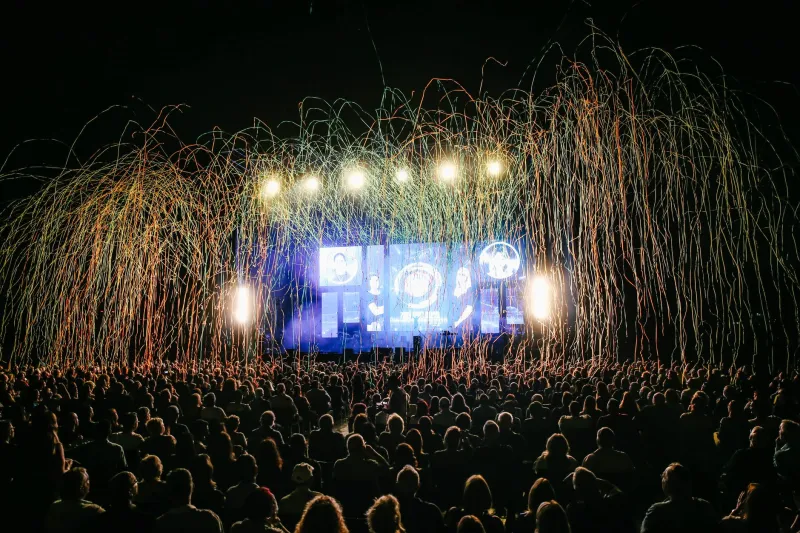
There's a sweet spot in festival seating that professional comedians understand intuitively even when they can't articulate it: close enough that you can see sweat, far enough that you can't read the setlist in someone's back pocket. That physical proximity to other human beings — strangers, technically, but strangers who all made the same weird choice to be in this specific room tonight — creates a neurological feedback loop that's genuinely impossible to replicate through a screen.
Laughter is contagious not just emotionally but physically. When someone near you laughs, your body responds. Mirror neurons fire. Your diaphragm considers options. The threshold for your own laughter drops measurably. This is why a half-empty room is such a brutal environment for experimental comedy, and why festival crowds — slightly over-packed, buzzing with anticipation, unified by the shared decision to show up somewhere in person — are such fertile ground for exactly the kind of material that would struggle anywhere else.
Weird comedy, formally strange comedy, comedy that asks you to sit with discomfort before the payoff arrives — all of it benefits enormously from a room full of people who are already physiologically primed to laugh together. The crowd isn't just an audience. It's an instrument the comedian is playing.
What Sterile Environments Do to Punchlines
Think about the last time you watched a comedy special on a streaming service and found yourself thinking, this is fine, I guess. Now think about the last time you saw a live set and left feeling like something had genuinely shifted in your brain chemistry. The difference isn't always the material. Often, it's the environment stripping the material of its context.
Comedy clubs — the traditional kind, with their two-drink minimums and their identical brick-wall backdrops and their perfectly calibrated sightlines — are actually pretty good at creating atmosphere. They've been doing it for decades. But they're optimized for a specific kind of comedy: the kind that moves in a straight line, setup to punchline, efficient and legible and designed to work the same way every night.
Alternative comedy frequently doesn't move in a straight line. It spirals. It doubles back. It asks you to trust the comedian even when the bit seems to be actively falling apart. That kind of comedy needs an environment that's already comfortable with the unconventional — a room that communicates, through its very architecture and atmosphere, that things might get strange here and that's why we came.
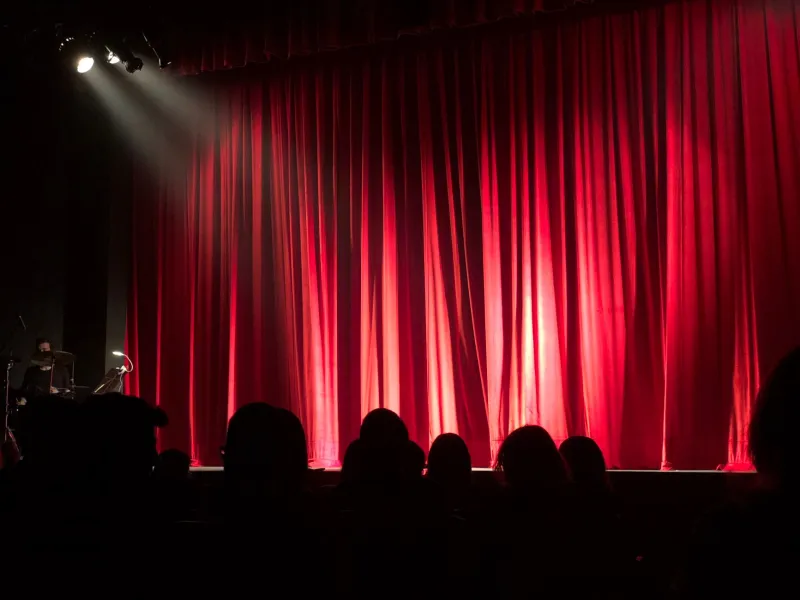
A repurposed theater with mismatched chairs and a PA system that hums slightly on the low end? That room is already telling you to expect the unexpected. Your senses have been briefed.
Temperature, Sound Bleed, and the Beautiful Chaos of Outdoor Stages
Outdoor festival stages introduce variables that would give a comedy club owner a panic attack: ambient noise, unpredictable weather, the distant sound of another act bleeding through from a neighboring stage, the occasional plane overhead. And yet, some of the most genuinely transcendent comedy moments happen in exactly these conditions.
Partly this is because the comedian has to work harder, and audiences respond to visible effort. But it's also because sensory unpredictability keeps everyone alert. When you're watching a set inside a perfectly controlled environment, your brain can drift. When a gust of wind just knocked over the comedian's water bottle and a dog is barking somewhere in the middle distance, you are present. You are paying attention with your whole body. And when comedy lands in that state, it lands differently — deeper, stranger, more indelible.
Eugene Mirman didn't build a festival around conventional comfort. The whole project has always been about creating conditions where something genuinely unexpected can happen, and then inviting the audience to be part of that happening. The physical environment is part of that invitation.
Why Your Body Votes Before Your Brain Does
Here's the practical upshot of all this sensory theorizing: if you've ever wondered why a comedian you love on record or on screen somehow lands differently when you see them live, you now have a partial answer. Your body was already working before the first joke. The room prepped you. The crowd calibrated you. The smell, the temperature, the specific quality of the light — all of it conspired to lower your defenses and open you up to something.
That's not a bug in the live comedy experience. It's the entire feature.
The best alternative comedy festivals aren't just booking good acts. They're curating environments — physical, sensory, atmospheric — that make the comedy better by making the audience more receptive. It's a feedback loop that no streaming platform has figured out how to replicate, and honestly, long may that remain true.
Your nose knew this before you did. Your brain is just catching up.