Not All Chaos Is Created Equal: The Unwritten Laws Governing What Makes a Heckle Legendary Versus Lethal
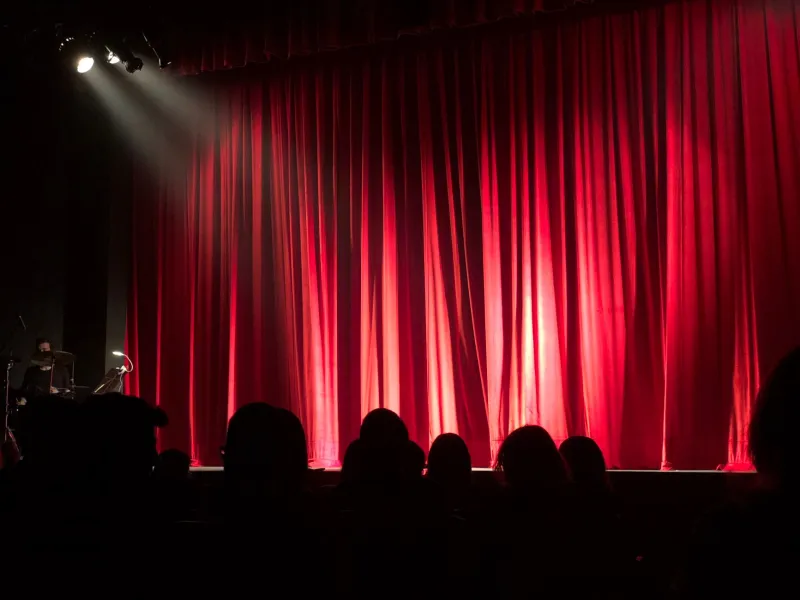
Somewhere between the third drink and the fourth song on the pre-show playlist, a certain kind of audience member makes a decision. They decide that the performer onstage — the one who has spent months crafting material, traveling through three cities in four days, and subsisting largely on green room cheese cubes — needs their help. They have something to add. They will add it. Loudly.
What happens next is either the stuff of festival legend or the slow-motion collapse of an otherwise beautiful evening. There is almost never an in-between.
After years of watching performers navigate the Eugene Mirman Comedy Festival's famously unpredictable audiences, we've come to understand something the comedy textbooks won't tell you: not all chaos is created equal. There is a hierarchy to the heckle. And understanding where your impulse to shout something falls on that hierarchy could mean the difference between being the person who made the show unforgettable and being the person the comic mentions, with visible exhaustion, in their next podcast appearance.
The Good Heckle: When the Audience Becomes a Collaborator
Let's start with the rarest and most beautiful creature in the wild: the heckle that actually improves the show.
These are the interruptions that feel like they were written into the script — except they weren't, which is the whole point. A performer is mid-bit, something unexpected happens from the crowd, and instead of derailing the momentum, it becomes the momentum. The comic pivots, the audience leans forward, and for three or four glorious minutes, everyone in the room is watching something that has never existed before and will never exist again.
What makes this kind of disruption work? Timing, mostly. And a kind of accidental emotional intelligence that the heckler themselves probably couldn't replicate if they tried. The best crowd interjections happen at the precise moment a performer has created enough space — a pause, a setup that's still landing — that a well-placed reaction can be incorporated rather than interrupted. It's the difference between handing someone a tool they can use and throwing a wrench into moving machinery.
Festival veterans will tell you these moments become the stories they actually tell. The callback that wrote itself. The one-liner from row two that became the title of a future special. The drunk woman in Brooklyn who said something so perfectly absurd that the headliner stopped, looked at her for a full five seconds, and then just said, "Yeah. Yeah, that's the whole show."
The Mediocre Heckle: Well-Intentioned, Still Annoying
Then there's the middle tier. The heckle that comes from enthusiasm rather than malice, from someone who genuinely loves comedy and genuinely believes, in this moment, that they are participating in it.
They are not.
This is the person who shouts the punchline they think is coming before it arrives. The one who yells "YEAH!" at the end of every sentence as though the comic is a preacher who requires congregation confirmation. The one who decides that now — right now, during a carefully constructed bit about their childhood — is the perfect time to share their own loosely related anecdote.
These interruptions don't destroy shows. They just sand the edges off them. They force the performer to spend energy managing the room instead of working the room, which are two entirely different skill sets and only one of them is fun. The mediocre heckle is the comedy equivalent of someone narrating a movie you're already watching. Nobody needed the commentary. The movie was right there.
For performers at alternative festivals especially, where the material tends to be structurally unusual and tonally specific, this kind of well-meaning noise can be genuinely disorienting. Weird comedy often depends on a particular atmospheric pressure. Disrupt that pressure with generic enthusiasm and you don't ruin the show — you just make it slightly worse, which is somehow more frustrating than ruining it.
The Bad Heckle: The One That Makes Comedians Reconsider Their Life Choices
And then there is the heckle that comics talk about in hushed tones, or very loud ones, depending on how much therapy they've had.
The bad heckle isn't always the loudest or the most aggressive. Sometimes it's just the one that arrives at the exact wrong moment — during a vulnerable bit, during a long silence that was doing real work, during the one minute of a forty-five-minute set where the performer genuinely needed the room to be quiet and absorbing. The heckle that lands in that minute doesn't just interrupt a joke. It interrupts trust.
Then there are the aggressive ones. The ones that aren't really engagement at all — they're performance of their own, using the comic as a backdrop. These hecklers aren't talking to the performer. They're talking to their friends, to the room, to some internal audience they've been performing for all night. The comic onstage is incidental. And a comic who has spent years learning how to command a room suddenly has to compete with someone who has no stakes and no craft and an inexhaustible supply of confidence.
Festival veterans have developed elaborate taxonomies for these moments. There's the Philosopher, who wants to debate the premise of the bit rather than experience it. There's the Corrector, who heard a slightly different version of this story and needs everyone to know. And then there's the Enthusiasm Grenade — the person who isn't hostile, just catastrophically loud at catastrophically wrong intervals, scattering the room's attention like pigeons in Times Square.
What Comics Actually Want You to Know
Here is the thing that performers almost never say from the stage because it would sound ungrateful: they don't want your participation unless they ask for it. Silence is not rudeness. Laughter is not passivity. Sitting in a dark room and being moved by something is one of the most active things a human being can do, and comics know this even when audiences don't.
What the best performers at weird, alternative festivals want from their crowds is presence, not contribution. They want you paying attention so closely that when they do something unexpected, your reaction is genuine and immediate and theirs to work with. That's the collaboration. That's the thing that makes live comedy irreplaceable.
The heckle that becomes legend is almost always the one that comes from someone who was so fully in the room — so completely locked in — that something just spilled out of them. It wasn't planned. It wasn't strategic. It was the overflow of someone who was actually there.
The heckle that kills the vibe is almost always the one from someone who wasn't really there at all. They were performing. They were managing their own experience. They were, in some fundamental way, still outside the room even while sitting in it.
The Hierarchy, Summarized
So here is the taxonomy, as honestly as we can render it: the best heckles come from presence. The worst come from performance. And the mediocre ones — the ones that don't destroy but do diminish — come from enthusiasm that hasn't quite figured out where to put itself.
If you're at a festival this year, here is the only advice that matters: be so completely in the room that the performer can feel it. Let that be your contribution. And if something genuinely irresistible spills out of you at exactly the right moment, well — that's between you and the comic.
Just know they're keeping score. And they have a podcast.