Crash Test Comedy: How Festival Stages Became the Proving Grounds for Ideas America Wasn't Ready to Hear Yet
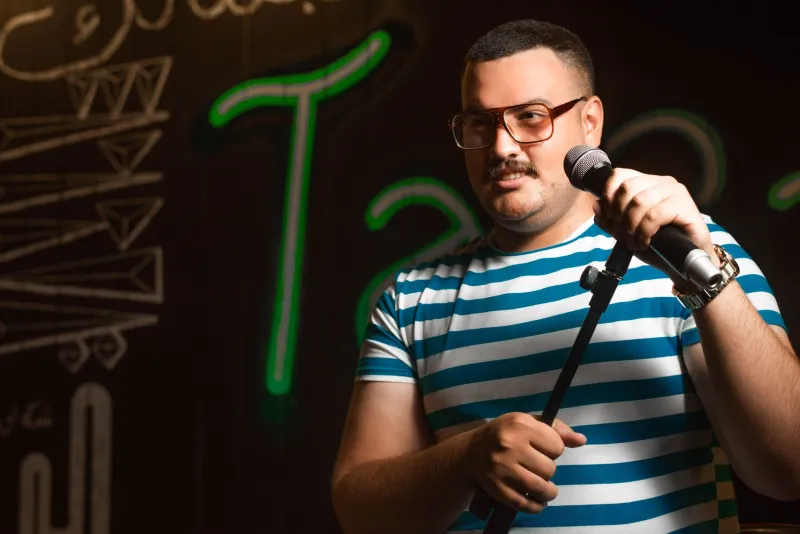
There's a particular moment that anyone who's spent serious time in alternative comedy festival audiences knows intimately. A comedian says something — something slightly ahead of the cultural curve, something that lands in the chest before it lands in the brain — and the room doesn't quite laugh. It reacts. A collective exhale, a nervous giggle, maybe a few people exchanging glances like they've just witnessed something they're not sure they were supposed to see. That moment? That's not a bit failing. That's a bit being born.
Festivals like this one have always been more than entertainment delivery systems. They are, in the most genuine sense of the word, laboratories. And the comedians who return year after year aren't just building audiences — they're running longitudinal experiments on what America thinks, fears, and desperately needs to laugh about before it can talk about it seriously.
The Petri Dish Has Seats and a Two-Drink Minimum
When a comedian workshopping new material steps onto a festival stage, they're not performing a finished product. They're testing a hypothesis. The hypothesis might be something like: Is the country ready to acknowledge that our relationship with our phones is genuinely grief-worthy? Or: Can I say the thing about [insert current political catastrophe] out loud without the room collapsing into existential dread?
The audience — a self-selected group of people who voluntarily paid money to watch someone say weird things in public — becomes the most honest focus group on earth. They can't hide. Their laughter is involuntary. Their silence is diagnostic. A comedian reads that feedback in real time and adjusts, sharpens, or sometimes completely abandons a premise based on data that no algorithm could ever replicate.
This is fundamentally different from what happens on a late-night set or a streaming special. Those are finished products, polished and approved and risk-managed. Festival performances are drafts. Beautiful, chaotic, occasionally transcendent drafts.
When the Bit Is Actually the Argument
Consider what happens when a comedian decides to spend twenty minutes on a topic that mainstream culture hasn't fully processed yet — say, the emotional labor of existing online, or the class dynamics hiding inside wellness culture, or the specific absurdity of American gun policy explained through the lens of, I don't know, a children's birthday party. These aren't just jokes. They're arguments wearing a costume.
The festival circuit has historically been where those arguments get their first real hearing. Alternative comedy spaces attract audiences that are slightly more tolerant of ambiguity, slightly more willing to sit with discomfort, and significantly more likely to tell their friends about something that genuinely unsettled them. That word-of-mouth is how an experimental bit about surveillance capitalism at a Brooklyn festival in 2019 ends up informing a comedian's Netflix special in 2022 and a New York Times think piece in 2023.
The timeline is real. The incubation period is real. Festivals are where culture gets drafted.
Eugene Mirman and the Art of the Advance Scout
Eugene Mirman built a career — and eventually this entire festival — on a foundational premise: that the weird stuff, the stuff that makes people uncomfortable in a productive way, is worth taking seriously. His own material has always functioned as a kind of advance scouting report on American absurdity, arriving at observations about bureaucracy, corporate language, and civic dysfunction years before those observations became dinner table conversation.
The festival that bears his name operates on the same logic. It doesn't book comedians who are already safe. It books comedians who are becoming something — artists in the process of figuring out what they need to say and whether the world is ready to hear it. The stage is explicitly offered as a space for that process, which is why performers return, why audiences return, and why the whole thing has accumulated a kind of cultural weight that extends well beyond any individual performance.
Reading the Room as Civic Duty
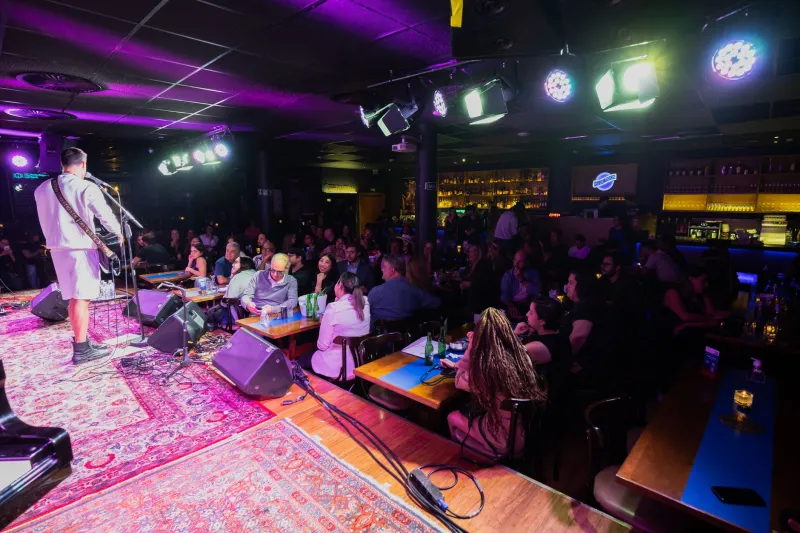
There's an argument to be made — and we're making it, right now, without apology — that what alternative comedians do when they test material at festivals is a form of civic work. Not in the earnest, capital-C Civics class sense, but in the sense that someone has to be the first person to say the thing. Someone has to stand in front of 300 people in a repurposed bar and find out whether a joke about [gesture broadly at everything] is going to land as catharsis or catastrophe.
The comedian absorbs that risk. The audience absorbs the discomfort. And somewhere in the transaction, a conversation that the country needed to have gets its first rehearsal.
This is how a bit about healthcare becomes a cornerstone of someone's identity as a political comedian. This is how material about gender that felt experimental in 2015 became the vocabulary for mainstream conversations by 2020. The festival circuit didn't cause those cultural shifts, but it absolutely accelerated them — by giving comedians a room to fail safely and an audience willing to be the first to understand.
What Doesn't Survive and Why That Matters
Not every experiment works, and that's the point. Material that feels urgent in the comedian's head but lands with confused silence in the room is telling them something valuable: either the framing is wrong, the timing is off, or the bit is solving a problem the audience doesn't recognize yet. That feedback is irreplaceable.
Some of the most important comedy never made it past the festival stage — not because it failed, but because it revealed something to its creator that redirected their entire approach. The bits that died in the room are as formative as the ones that became signature moments. You can't run a successful experiment without accepting that most of your hypotheses will be wrong.
Alternative festivals are uniquely positioned to honor that failure. There's no viral clip to survive, no brand deal to protect, no algorithm to appease. There's just a comedian, a room, and the very live question of whether this idea has any business existing in the world.
The Audience as Co-Author
Here's the part that tends to get underacknowledged: the audience at a festival isn't a passive recipient of completed art. They're participants in its creation. When a crowd in a small venue responds to something unexpected — when they laugh at the thing the comedian wasn't sure about, or go quiet at the thing the comedian thought was safe — they're actively shaping what that material becomes.
That's a strange and wonderful kind of collaboration. Nobody signs a contract. Nobody gets credited. But the people who showed up on a Tuesday in September to watch someone try out new stuff about the end of democracy or the psychology of Amazon Prime are, in some meaningful way, co-authors of whatever that comedian eventually produces.
Festivals make that possible. Not by being precious about the process, but by creating a space where the process is the point — where the experiment is the show, and the weirdest possible outcome is also, reliably, the best one.